01
Managed SIEM
Centralize logs from identity systems, endpoints, servers, firewalls, SaaS platforms, Microsoft 365, cloud services, and other critical systems.

DBT helps organizations monitor threats, reduce alert noise, investigate suspicious activity, support compliance evidence, and improve response readiness through managed SIEM, MXDR, SOC escalation, and security operations support.
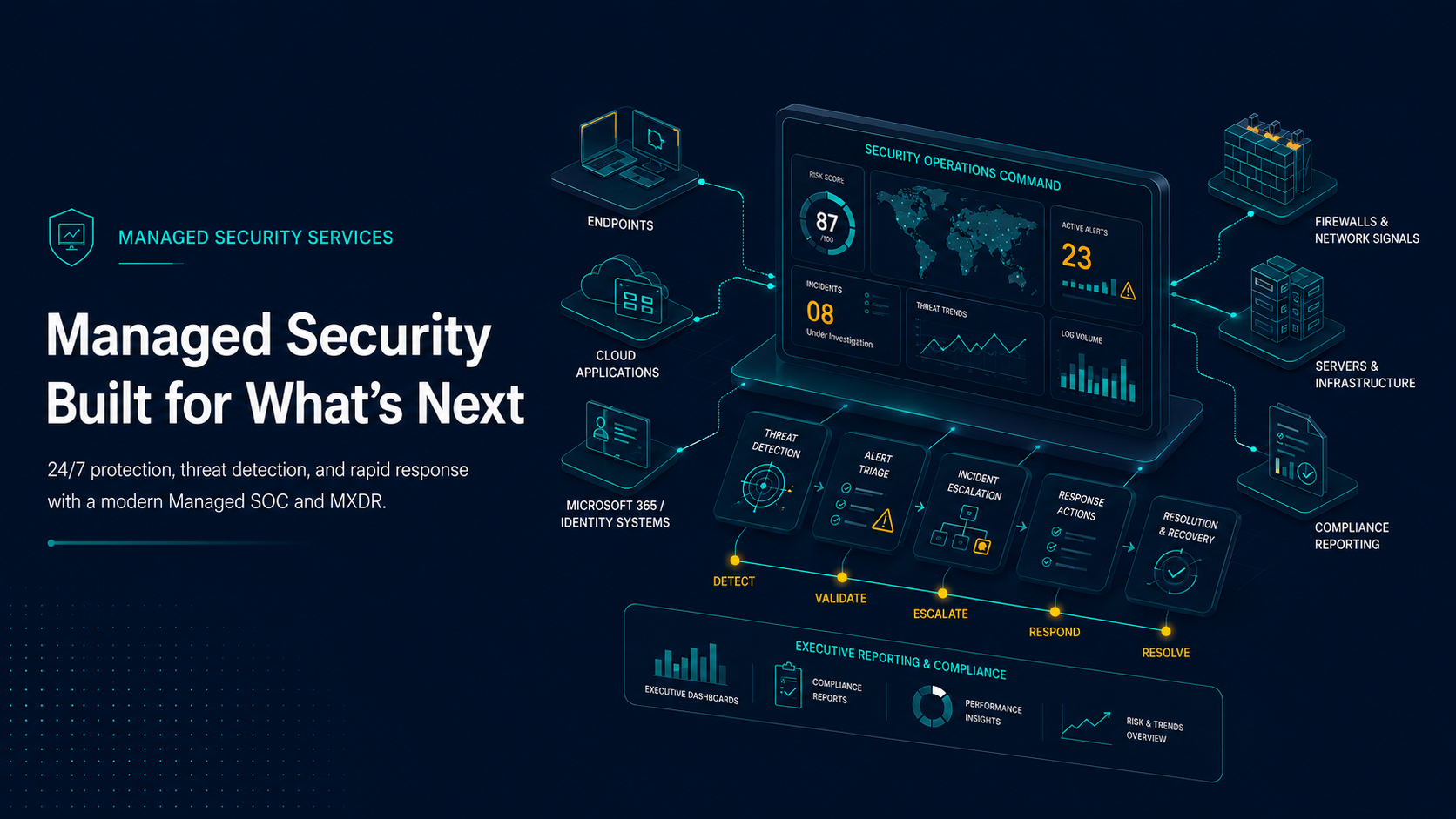
DBT provides managed security services for organizations that need stronger detection and response without building a full internal SOC. We help centralize telemetry, tune alerts, investigate suspicious activity, escalate meaningful events, document response actions, and provide reporting that supports executive visibility and compliance readiness.
DBT combines security tooling, analyst review, operational workflows, and executive reporting so security alerts become actionable security outcomes.
Centralize logs from identity systems, endpoints, servers, firewalls, SaaS platforms, Microsoft 365, cloud services, and other critical systems.
Use analyst-led monitoring and escalation to detect suspicious activity across endpoint, identity, email, cloud, network, and business system telemetry.
Reduce noise by reviewing alerts, validating severity, correlating related events, and escalating the activity that requires attention.
Monitor for attacker behaviors such as suspicious sign-ins, privilege misuse, malware activity, lateral movement, persistence, data access anomalies, and administrative changes.
Support investigation, containment planning, evidence preservation, escalation, remediation coordination, and recovery readiness during security events.
Integrate endpoint protection and detection signals into broader security monitoring so endpoint events are reviewed in business and identity context.
Support HIPAA, GLBA, FFIEC, CJIS, PCI DSS, SOC 2, CMMC, and NIST readiness through logging, monitoring, escalation records, and security reporting.
Provide leadership with visibility into security trends, alert activity, incidents, remediation themes, risk reduction, and program maturity.
DBT helps create the operating model around your security tools: log onboarding, alert tuning, triage workflows, escalation criteria, investigation support, reporting, and continuous improvement. The goal is not just to collect alerts. The goal is to understand what matters and respond consistently.
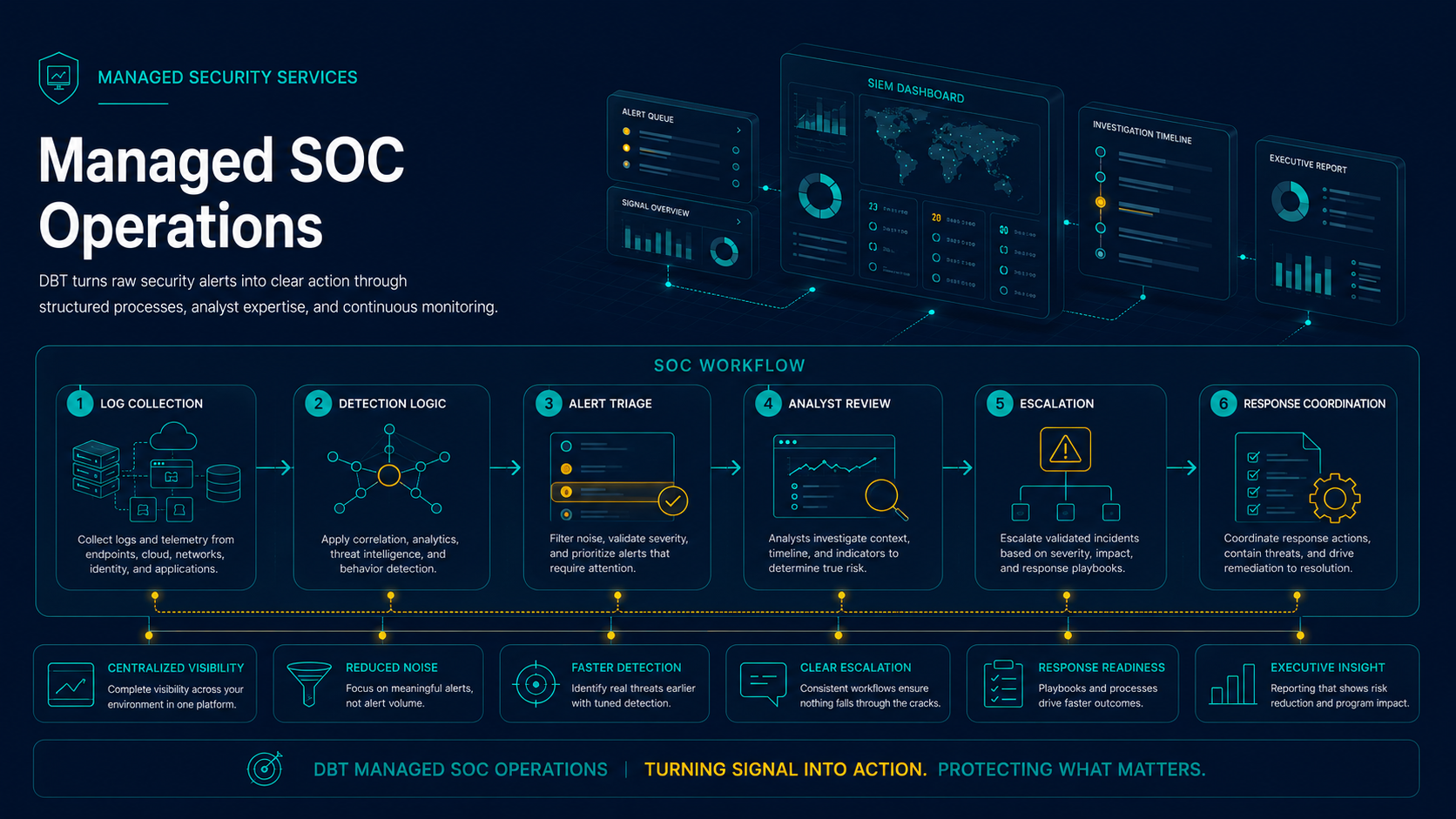
Attackers rarely stay inside one tool or one system. DBT helps bring together meaningful telemetry from Microsoft 365, Entra ID, endpoints, firewalls, servers, cloud platforms, SaaS systems, and business-critical applications so investigations have context instead of isolated alerts.
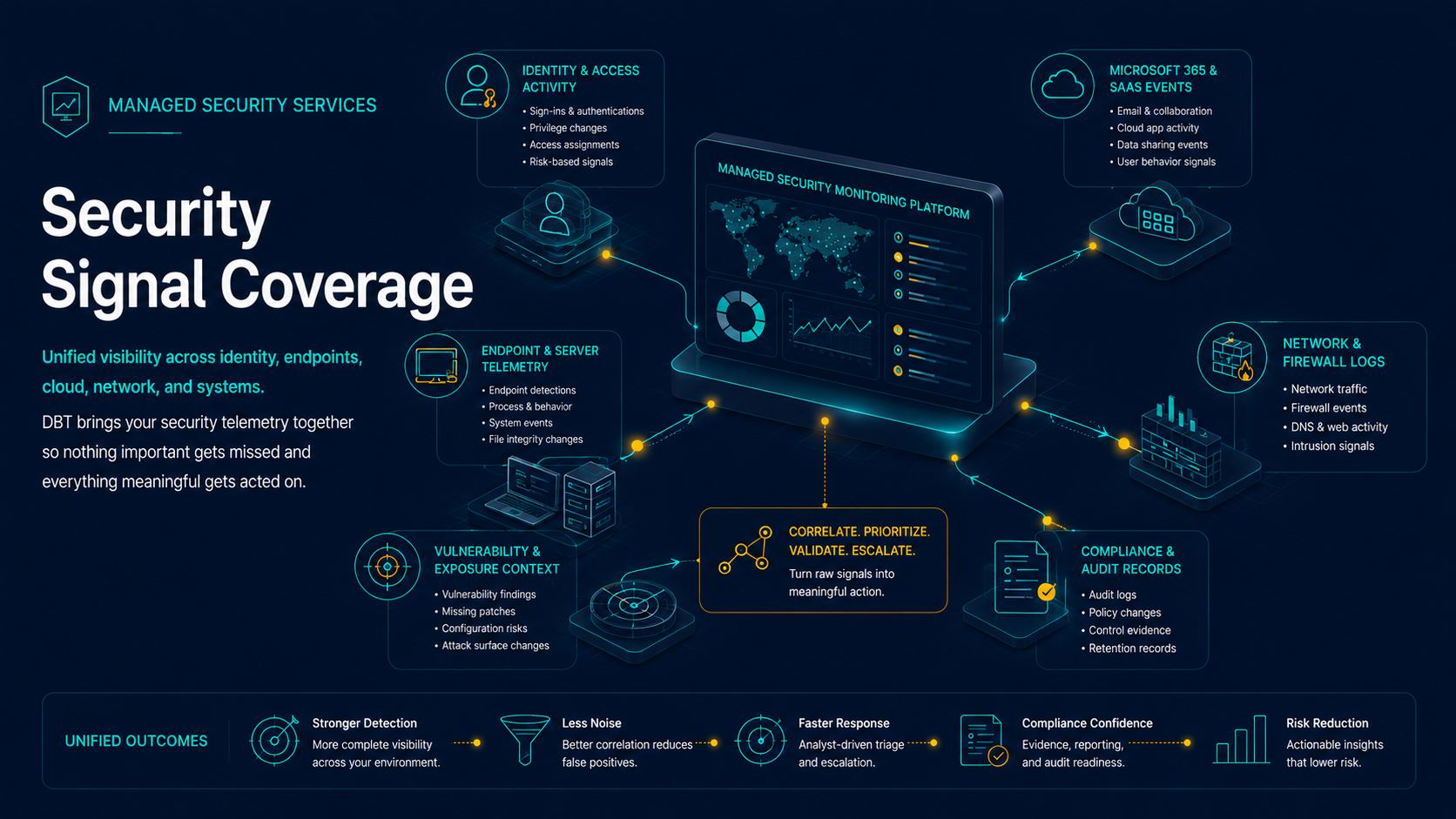
Operational Coverage
Managed security services are most valuable when monitoring is tied to the systems attackers actually target and the records auditors expect to see.
Monitor sign-ins, MFA behavior, privilege changes, risky authentication patterns, service account usage, and administrative activity.
Review endpoint detections, suspicious processes, malware events, lateral movement indicators, abnormal service activity, and containment opportunities.
Track mailbox activity, administrative changes, file access, external sharing, risky cloud behavior, and application-level security events.
Correlate firewall, VPN, DNS, remote access, and network security events with endpoint and identity telemetry.
Use vulnerability and asset context to prioritize alerts involving high-risk systems, exposed services, unsupported software, or critical business assets.
Maintain monitoring, escalation, investigation, and reporting outputs that help demonstrate security control operation over time.
Give leadership and internal IT teams a clearer operating model for threat detection, investigation, escalation, and security reporting.
Filter noise, validate events, and prioritize alerts that indicate meaningful risk or require action.
Use centralized telemetry and analyst review to understand suspicious activity more quickly.
Create defined escalation paths, response records, containment guidance, and coordination workflows before incidents occur.
Support audit and regulatory expectations with evidence of monitoring, review, escalation, and security operations activity.
See activity across users, endpoints, cloud systems, network controls, and critical business applications.
Translate security operations activity into trends, risks, outcomes, and investment priorities leadership can understand.
Related Guidance
Managed security becomes more valuable when it is connected to compliance obligations, identity hardening, penetration testing, vulnerability management, and incident response readiness.
Security Assessment
DBT can review your current monitoring coverage, security operations workflow, logging gaps, and response process to identify practical next steps.
As DBT builds out formal case studies, these anonymized outcome examples preview the types of security, identity, compliance, and operational improvements the site should route visitors toward.
“DBT helped us modernize authentication, improve visibility, and strengthen our security posture without disrupting operations.”
“Their cybersecurity-first mindset is very different from a traditional MSP. The focus on operational risk and resilience has been invaluable.”
“DBT helped align our identity and compliance initiatives while improving the user experience. Their strategic guidance has been excellent.”